








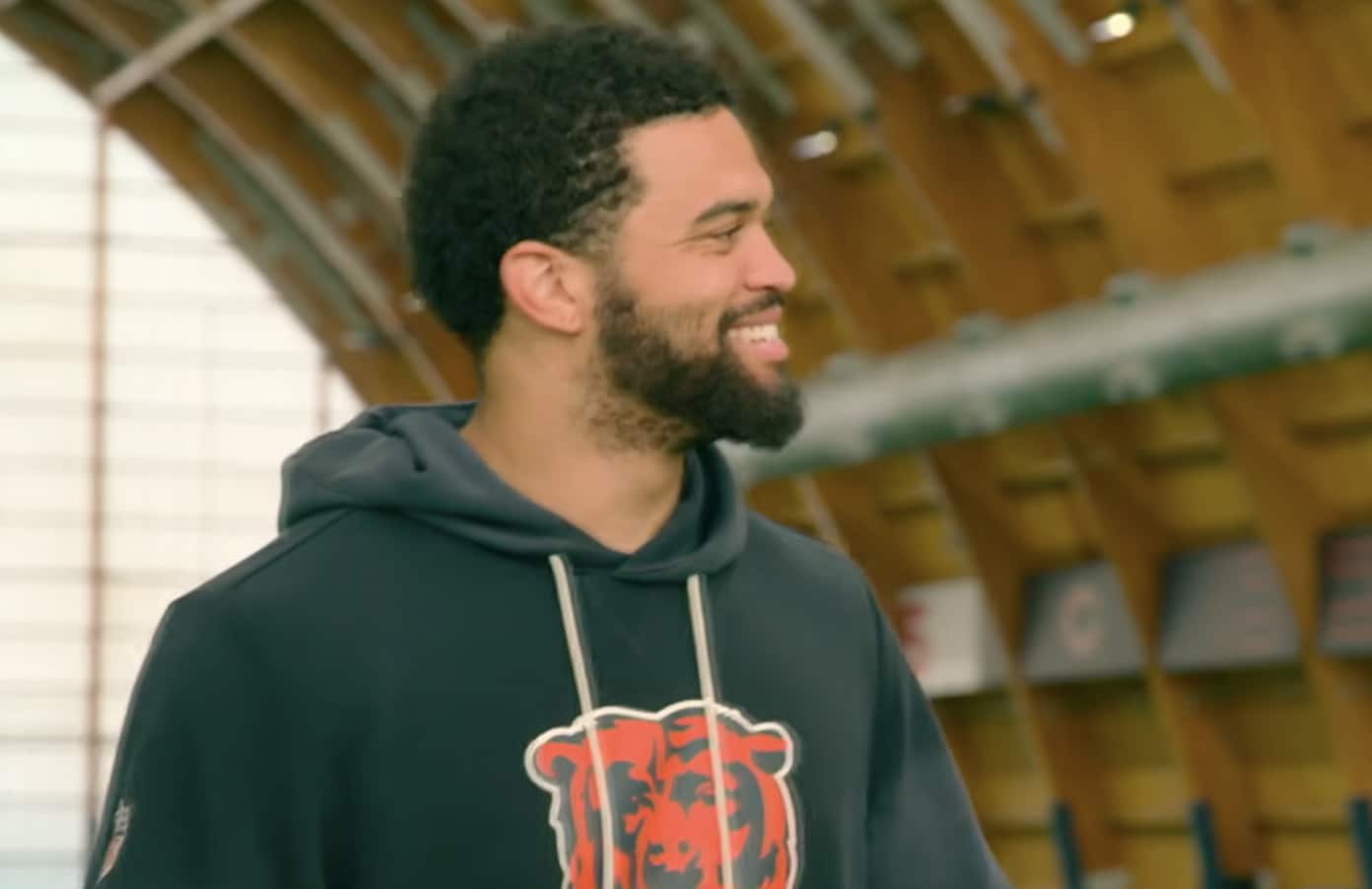
Chicago Bears star Caleb Williams recently encountered a setback in his efforts to expand his commercial empire. The quarterback’s attempt to trademark the nickname “Iceman” was initially rejected by the United States Patent and Trademark Office (USPTO). Williams had intended to use the moniker to anchor a diverse lifestyle brand encompassing apparel, athletic equipment, sporting goods, and various entertainment ventures.
The federal agency stalled the application this week, pointing to a potential “likelihood of confusion” with an existing trademark. Specifically, LaCrosse Footwear has held rights to the “Iceman” name since 1988, using it for their line of insulated boots. While other sports icons like NBA legend George Gervin and UFC Hall of Famer Chuck Liddell are famously associated with the nickname, their respective filings did not play a role in this specific refusal.
According to documents obtained by ESPN, the USPTO noted that the marks are “identical in appearance, sound and meaning.” The refusal letter further explained that because the names are indistinguishable, they are likely to create the same commercial impression for consumers, even when applied to the different goods and services proposed by Williams.
However, this initial roadblock doesn’t necessarily mean the branding effort is over. Josh Gerben, a prominent trademark attorney, noted that preliminary rejections are a standard part of the process. While the USPTO is protecting LaCrosse Footwear’s specific niche in insulated footwear, Williams may still find a path forward.
“The current registration is for a very specific product—insulated boots,” Gerben explained. He suggested that while securing the name for general clothing might be difficult, Williams could still potentially register the trademark for other items included in his extensive application.
Williams, who is currently playing under a lucrative four-year, $39.4 million rookie deal, has consistently demonstrated a forward-thinking approach to his business interests. Since his days as a Heisman-winning standout at USC, he and his management team have focused on maximizing his personal brand, and this trademark filing represents the latest move in that strategy.
On the field, Williams’ performance has matched his off-field ambition. Over 36 career games, he has compiled 8,108 passing yards, 51 touchdowns, and 18 interceptions. His transition from a developmental rookie year to a poised leader has been a primary catalyst for the Bears’ recent resurgence.
After a difficult 5-12 start to his professional career in 2024, Williams engineered a dramatic turnaround the following season. He led Chicago to an 11-6 record and an NFC North title, highlighted by a playoff victory over the rival Green Bay Packers. One of his most defining moments came in a narrow divisional round loss to Detroit, where he converted a miraculous fourth-down touchdown pass in the closing seconds to force the game into overtime.
The Evolution of a Chicago Icon and MVP Candidate
With offensive coordinator Ben Johnson returning to lead the scheme, expectations for Williams have reached an all-time high. Many league observers view him as a primary candidate for the 2026 MVP award. History suggests that elite quarterbacks often experience their most significant statistical growth in their second year within a stable system, and Williams seems perfectly positioned to follow that trajectory.
During the Bears’ late-season push and subsequent playoff run, Williams showed a refined ability to balance his explosive playmaking with better ball security. By mastering the rhythm of Johnson’s offense while retaining his unique ability to create when plays break down, he has become one of the most difficult players in the league to defend.
The Bears have surrounded their franchise centerpiece with a deep stable of playmakers, creating an environment where Williams can challenge for the league lead in several passing categories. If Chicago remains at the top of the NFC North and competes for a first-round bye, Williams will likely be at the forefront of the MVP conversation.
The “Iceman” nickname itself stems from his composure in high-stakes moments. His penchant for fourth-quarter rallies and game-winning drives has endeared him to the Chicago faithful. If he can maintain this level of clutch performance while elevating his overall production in Year 2 under Johnson, he could become the first Bears player to win the MVP award in nearly half a century.
Final Thoughts: While the legal battle over the “Iceman” trademark continues in the courtroom, Caleb Williams has already solidified the persona on the gridiron. Whether he officially secures the brand name or not, his ability to remain cool under pressure has transformed the Chicago Bears into legitimate Super Bowl contenders and established him as one of the NFL’s premier stars.