

The Pittsburgh Steelers did not enter draft week expecting offensive line to be a first-round priority. Their pass protection ranked in the top 10 in 2025, and the unit was anchored by a young core.
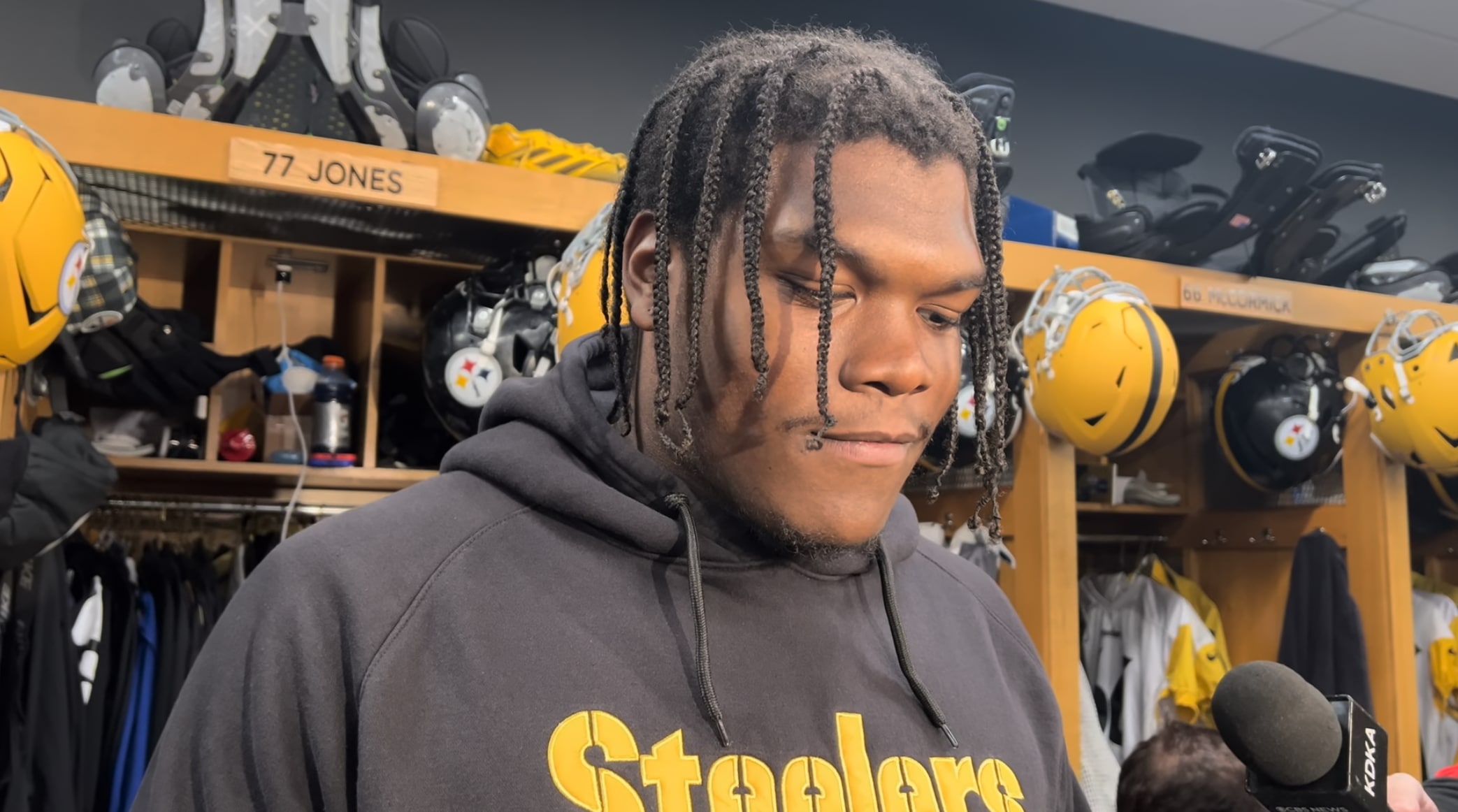
Then reports emerged that Broderick Jones suffered a setback in his recovery from a neck injury, putting his 2026 availability in question. That one development shifted the Steelers’ entire draft calculus and turned pick No. 21 into one of the most consequential spots on the board.
Jones’ setback turned a depth concern into a first-round decision overnight
For most of the offseason, the Steelers’ offensive line was viewed as stable. Not elite, but functional enough that Pittsburgh could use its first-round pick elsewhere. Jones’ neck injury changed that equation immediately.
Without clarity on when or whether Jones will be available, the Steelers have to plan as if they need a starter. What was a long-term depth question a week ago is now an urgent roster problem that has to be addressed in the first round if the right player is available.
The Steelers are sitting at the back end of the first-round offensive line tier
Pick 21 normally puts a team outside the most impactful range of the board. This year is different. There is a clear tier of offensive linemen expected to go in round one, and Pittsburgh is sitting right at the back end of it.
That creates a timing problem. If the Steelers wait, the top-tier linemen will be gone. If they act, they trigger a run that forces every team behind them to adjust.
Insiders expect a surge of offensive linemen between picks 15 and 25. The Steelers are sitting directly in the middle of that range, which means their decision will either start the run or leave them on the wrong side of it.
Fano, Freeling, Miller, and Ioane have all been linked to Pittsburgh
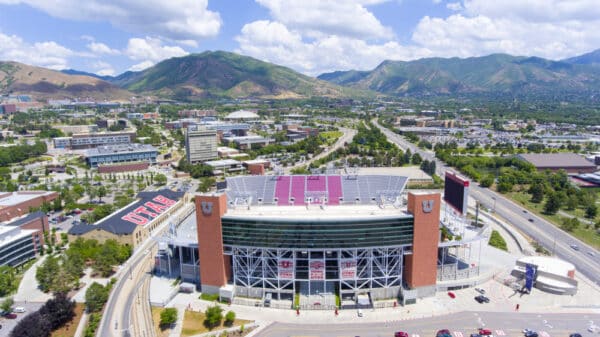
The Steelers’ options are tied to specific players. Spencer Fano out of Utah is a versatile, athletic tackle. Monroe Freeling from Georgia is a high-upside developmental starter. Blake Miller from Clemson is an experienced, high-floor option. Vega Ioane from Penn State is the top guard in the class.
Each solves a different version of the same problem. Fano and Freeling provide long-term tackle insurance. Miller offers immediate reliability. Ioane addresses the interior if the Steelers decide to shift an existing player to tackle.
The fact that there is no single obvious answer is what makes the pick complicated. Pittsburgh has to decide not just which player to take, but which version of their offensive line they are building toward.
Whatever the Steelers do at 21 will reshape the board for everyone picking behind them
There is a noticeable drop-off in offensive line talent after the first-round tier. Teams drafting behind Pittsburgh know it. If the Steelers take a guard, interior linemen start flying off the board. If they take a tackle, teams scramble for the last starting-caliber options at the position.
That is how runs start in the first round. Not at the top of the draft where the picks are predictable, but in the range where one team’s decision forces a chain reaction. The Steelers are in that exact spot.
The contradiction is that Pittsburgh’s line was actually good and they are still being forced to address it
The Steelers’ offensive line graded as a top-three unit in pass-block efficiency and a top-10 overall group in 2025. This is not a team drafting out of failure. It is a team reacting to uncertainty, injury risk, and future planning.
That makes the decision harder, not easier. When a team has an obvious weakness, the pick is straightforward. When a team has a strength that suddenly becomes fragile because of one injury, the calculation involves projecting risk rather than filling a known hole.
If the Steelers guess wrong and pass on a lineman, the run starts without them and they are left with second-tier options. If they reach for a player who does not match the value of the pick, they leave production on the board at another position.
Pittsburgh did not plan to drive the first round. Jones’ neck injury and the structure of this draft class forced them into that position. The Steelers are not the best team on the board at 21, but they are in the one spot where their decision dictates what every team behind them does next. Getting it right stabilizes the offensive line for years. Getting it wrong means reacting to the same problem again next offseason with fewer options.