






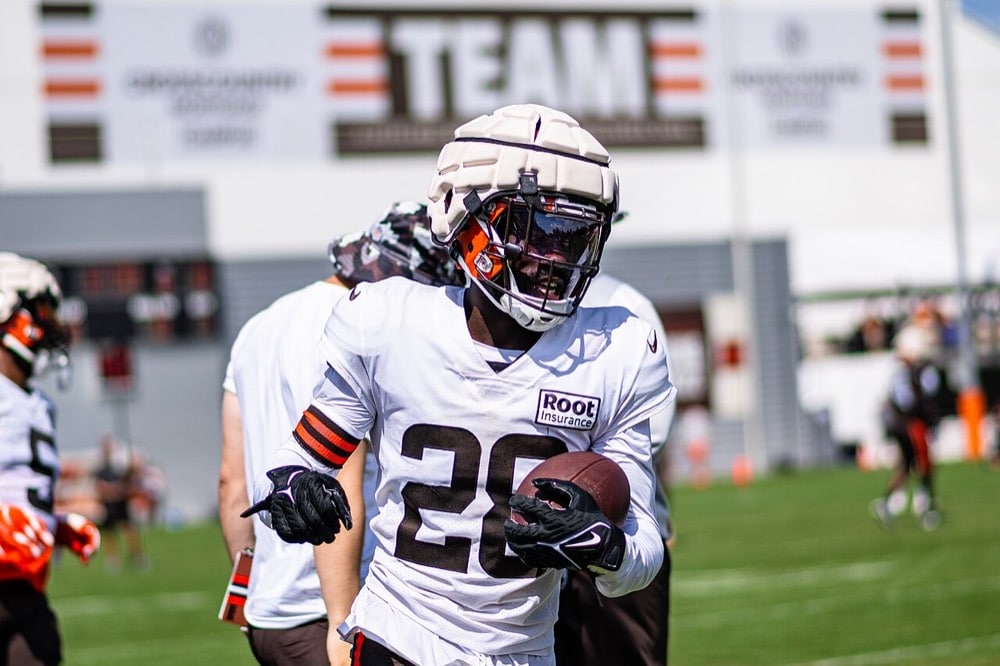
In its ongoing mission to mitigate concussion risks stemming from facemask impacts, the NFL has granted up to $100,000 to Guardian Sports and SoftShox. Rather than altering the traditional plastic and metal bars positioned in front of players’ faces, these companies are focusing heavily on the straps securing the jaw.
SoftShox chinstraps represent the startup’s debut commercial product. Several NFL players utilized them during the season after the company partnered with Guardian—which is now a SoftShox investor—to handle the distribution of its hydraulic shock absorption technology. Alongside the financial backing from the league, SoftShox has secured approximately $8 million through investments and grants to fund ongoing product development, though lingering skepticism remains regarding the true long-term benefits of incremental helmet enhancements.
The Growing Problem of Facemask Impacts in Football
League statistics reveal that across the NFL, the proportion of in-game concussions triggered by blows to a player’s facemask climbed from 29% in 2015 to 44% in 2025. While engineering teams continuously upgraded helmet shells and internal padding layouts over the years, facemasks and chinstraps experienced very little design evolution.
Ann Bailey Good, a senior engineering director at Biocore who works alongside the NFL’s HealthTech Challenge program, noted the inherent difficulties of updating this specific piece of equipment. Maintaining clear visibility and proper breathing capabilities creates unique design hurdles that make traditional overhauls exceptionally complex.
Engineering Solutions Through Innovative Chinstrap Design
To bypass these manufacturing challenges, SoftShox turned its attention directly to the chinstrap.
The core technology traces back to Stanford’s CamLab under the direction of engineer David Camarillo. In 2022, Gordon Avery—a former Princeton football teammate of Camarillo and a fellow concussion survivor—teamed up with Dr. Gerald Grant to launch SoftShox, with the goal of commercializing a concept previously confined to laboratory settings.
Integrating a nickel-sized hydraulic shock absorber into a standard chinstrap provided a swift pathway to the commercial market, while the organization simultaneously explores methods to integrate larger cushioning components into alternative areas of the helmet infrastructure.
Historically built strictly to keep the helmet securely fastened, chinstraps can function similarly to an automotive seatbelt during a heavy collision. Nick Cecchi, the chief science officer at SoftShox, compared the company’s protective intervention directly to a car’s hydraulic shock absorber network.
According to Avery, the SoftShox chinstrap can lower head impact severity by as much as 35%, though definitively translating those mechanical improvements into measurable long-term brain health outcomes remains a significant challenge for researchers.
Avery emphasized that facemasks consistently rank as the lowest-performing impact zones during standard helmet testing evaluations. He noted that the newly designed chinstrap aims to bridge that critical protective gap situated directly in front of a player’s face.
The Future of Player Safety Equipment
Good characterized the success of SoftShox as merely the opening phase of a broader, ongoing effort to inspire, identify, and deploy further advancements in facemask engineering.
Meanwhile, SoftShox aims to expand far beyond chinstraps. The brand is currently testing its specialized cushioning in bicycle helmets and intends to roll out protective options tailored specifically for youth athletes.
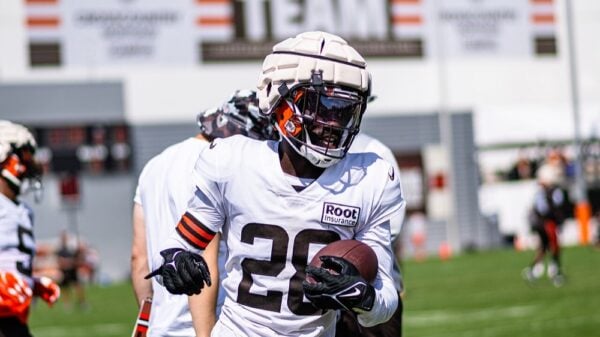
As ongoing scientific research continues to connect cumulative head impacts with degenerative brain diseases, numerous NFL players have readily adopted various forms of modern protective gear. These range from Guardian’s soft-shell helmet wraps to the bloodflow-regulating Q-Collar worn around the neck, despite open questions regarding the ultimate effectiveness of these contemporary solutions.
Some researchers also raise concerns that even if protective gear successfully minimizes the force of individual collisions, athletes might feel a false sense of security and subsequently accumulate a higher volume of dangerous hits.
Addressing this common inquiry, Avery highlighted the intrinsic physical and social value of participating in football—including the teamwork, competitive spirit, athleticism, and life lessons gained through team sports.
Avery concluded that the company views its primary mission as preserving all the positive aspects of the sport while actively working to make the game safer for participants.