












While the Dallas Cowboys haven’t captured a Super Bowl title in three decades and currently hold the longest conference championship appearance drought in the NFC, the team remains unrivaled in a different arena: financial value. For the seventh consecutive year, “America’s Team” has secured the top spot in global sports franchise valuations, proving that on-field struggles haven’t dampened their economic dominance.
According to recent industry data, the Cowboys are now valued at a staggering $15.5 billion, marking a 22% increase over the previous year. This valuation highlights a broader trend of NFL supremacy in the sports world; of the top global franchises, only six non-football entities carry a higher valuation than the Cincinnati Bengals, who sit at the bottom of the NFL rankings with a $7.4 billion price tag.
The Remarkable Return on Jerry Jones’ Investment
The financial trajectory of the Cowboys is a testament to the business acumen of Jerry Jones. When he purchased the franchise in 1989 for $150 million—a price that included the assumption of unfunded liabilities—the team was a struggling asset. Today, that investment has grown 100-fold. To put that into perspective, the S&P 500 has grown by roughly 27 times during that same 35-year window, underscoring how professional sports teams, and the Cowboys in particular, have outpaced traditional market indices.
Unmatched Revenue and Profitability Metrics
The Cowboys occupy a unique financial tier, generating $1.3 billion in annual revenue. In the global sports landscape, only Real Madrid competes at this level of income. The team’s local revenue is nearly 70% higher than their closest NFL competitor, the Los Angeles Rams.
More impressively, the Cowboys’ earnings before interest, taxes, depreciation, and amortization (EBITDA) are estimated at $510 million. This figure is double that of the Rams and nearly four times the league average of $139 million. While many sports franchises are valued based on revenue multiples due to low profitability, the Cowboys operate as a highly efficient cash-generating machine. At 30 times EBITDA, the franchise justifies its massive valuation through actual earnings, whereas the rest of the NFL averages a much higher multiple of 72, indicating the Cowboys are a more “grounded” business despite their high price tag.
Strategic Independence in Merchandising and Sponsorships
A significant driver of the Cowboys’ financial success is their departure from standard league protocols. Dallas is the only NFL team that operates outside of the league’s centralized merchandise system. This independent business arm generates nearly $200 million in yearly revenue.
Furthermore, the organization has leveraged its brand to secure massive sponsorship deals. Over the last year, the Cowboys renewed several major partnerships, some at three times their previous value. With $300 million in annual sponsorship revenue, they nearly double the intake of any other NFL franchise. This aggressive commercial strategy ensures a steady stream of capital regardless of the team’s seasonal win-loss record.
Real Estate and Venue Enhancements
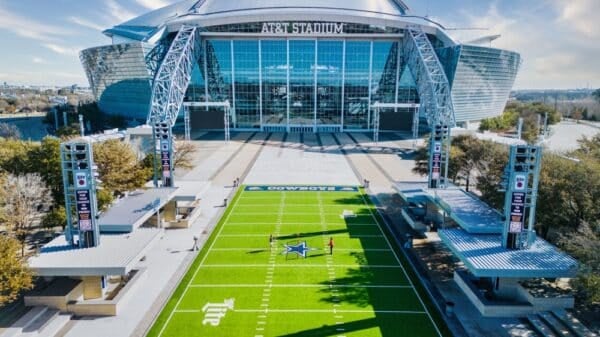
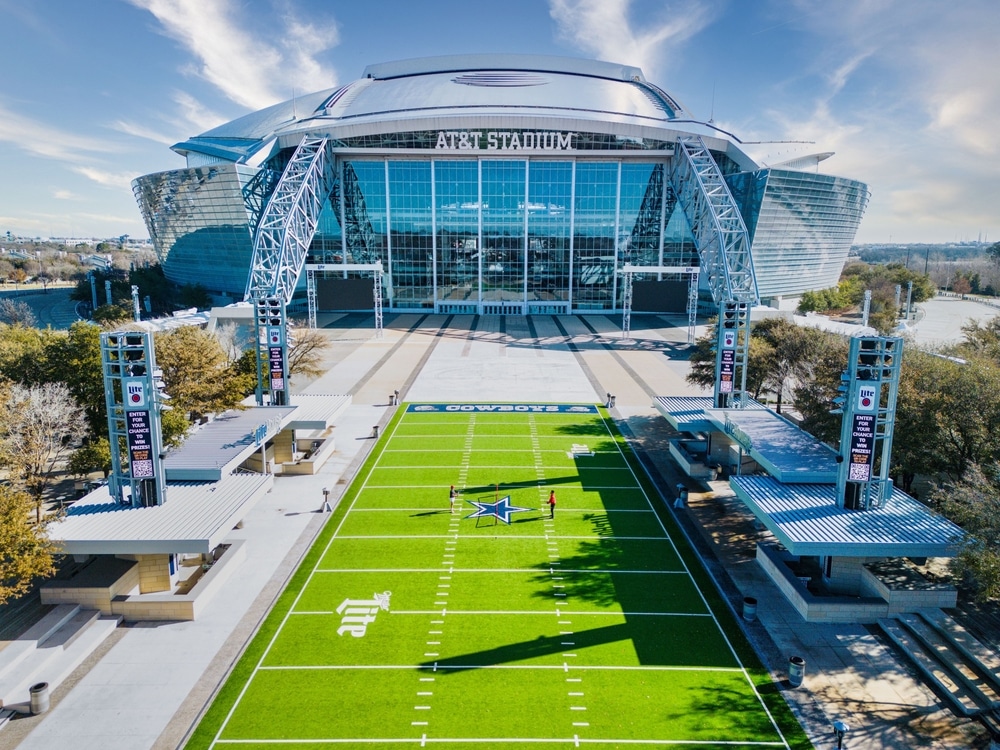
The Cowboys’ physical footprint is as valuable as their brand. In April, the team extended its lease at AT&T Stadium through 2055, a deal bolstered by a $273 million commitment from the city of Arlington for stadium improvements. In preparation for the upcoming World Cup, the Cowboys have invested an additional $300 million into the venue, which originally opened in 2009.
Beyond the stadium, “The Star”—the team’s $1.5 billion, 91-acre headquarters and practice facility—serves as a hub for real estate and branding. Opened in 2016, this mixed-use development has expanded the Cowboys’ empire into hospitality and commercial real estate, providing even more avenues for corporate partnerships and fan engagement.
From Financial Ruin to a Global Empire
The current prosperity of the Cowboys stands in stark contrast to the state of the league and the team in the 1980s. During that era, the NFL faced labor strikes, competition from the USFL, and limited television revenue. Each team averaged only about $15 million annually from TV deals, and the league had yet to become the broadcast titan it is today.
By 1989, the Cowboys were losing $1 million per month, and a portion of the team was actually owned by the U.S. government following the savings and loan crisis. On the field, the team suffered through five consecutive losing seasons, including a dismal 1-15 record during Jones’ first year as owner. However, this period of struggle set the stage for the 1990s dynasty, where the team won three Super Bowls in four years, and Jones began challenging the NFL’s centralized control over sponsorships and licensing.
Summary of the Cowboys’ Economic Legacy
Despite the roster turnovers and the elusive search for another championship trophy, the Dallas Cowboys’ business model remains the gold standard in professional sports. Jerry Jones’ shift from a 1-15 start to overseeing a $15.5 billion empire reflects a transformation that prioritized brand independence and diverse revenue streams. As Jones recently noted, while the players and rosters change over the decades, the Cowboys’ position at the top of the financial leaderboard remains the one constant in an ever-evolving league.