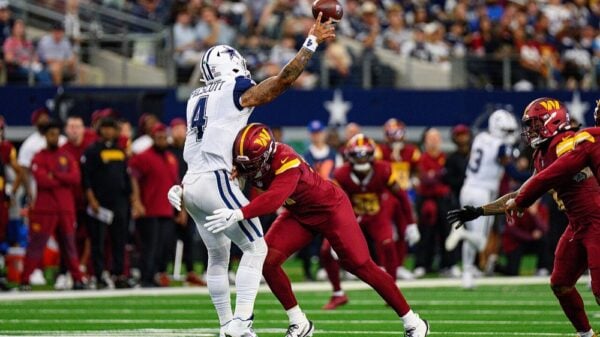
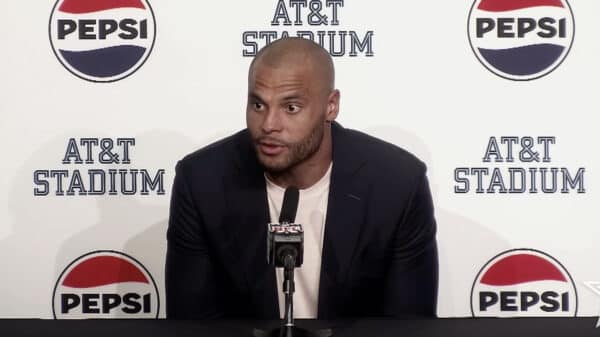



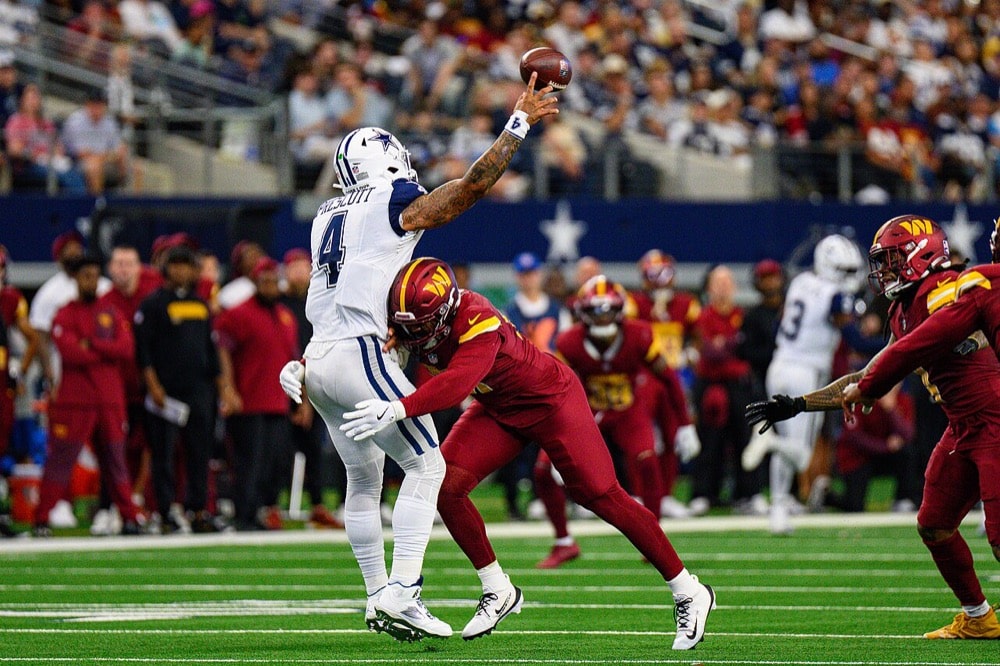
At the midway point of the 2026 season, the Dallas Cowboys find themselves grappling with a fundamental question: who are they when they have the ball? When quarterback Dak Prescott was asked recently if the team had established a clear offensive identity, his response was both candid and cautious.
“Is it one we’re proud of? I don’t know,” Prescott admitted during a press conference in Frisco. While he expressed confidence that improvements are coming, the current state of the Dallas offense suggests a unit that has moved away from the creative elements that made it successful in previous campaigns.
Analyzing the Cowboys’ Schematic Regression
On the surface, the Cowboys’ scoring average of 27.4 points per game appears respectable. However, a deeper dive into the metrics reveals an offense that has become increasingly static and predictable. Under offensive coordinator Brian Schottenheimer, the Cowboys have significantly reduced their reliance on modern “easy buttons”—such as pre-snap motion, play action, and under-center looks—that typically help a quarterback decipher opposing defenses.
Last season, Dallas utilized a balanced and varied approach, ranking in the top half of the league in several key categories. This year, the team has plummeted to the bottom of the NFL in pre-snap motion frequency. Additionally, the ground game has struggled to provide support, ranking eighth-worst in the league with only 94.1 rushing yards per contest. This inefficiency has forced Dallas to run the ball at the fifth-lowest rate in the NFL (32.5%), making them a one-dimensional, pass-heavy team.
The Tactical Divide: Schottenheimer vs. Prescott
There appears to be a philosophical difference regarding how the Cowboys should structure their attack. Schottenheimer has suggested that high rates of motion can be difficult to maintain when playing from behind and can potentially overcomplicate the “picture” for the quarterback. Prescott, conversely, views these tools as vital information-gathering assets.
“Sometimes [motion] is just to dress it up and take the defense, give them a different look,” Prescott explained. He noted that changing the look of core plays can help break tendencies. More importantly, Prescott uses motion as a diagnostic tool: “Sometimes it’s used strictly for me to see the disguise, to see the matchups that we’ve got… getting all the information I can through motion.”
Comparing the Numbers: 2025 vs. 2026 Trends
The statistical shift in the Cowboys’ offensive philosophy is stark when comparing the current season to last year’s production levels:
| Category | 2025 Season (Rank) | 2026 Season (Rank) |
|---|---|---|
| Pre-Snap Motion Rate | 56.6% (13th) | 33.8% (31st) |
| Play Action Usage | 28.2% (9th) | 24.2% (21st) |
| Under Center Rate | 38.4% (11th) | 35.7% (22nd) |
| Shotgun Formation Rate | 61.6% (22nd) | 64.3% (11th) |
| Rushing Play Rate | 41.5% (24th) | 35.5% (28th) |
| Average Tempo (Seconds) | 32.9 (1st) | 33.8 (1st) |
While the Cowboys continue to operate at one of the fastest tempos in the league, the lack of structural variety has made it more difficult for Prescott to find consistent success. Without a effective running game to lean on and fewer schematic advantages being called from the sideline, the pressure on the passing game has reached a critical level.
Final Thoughts on the Dallas Offensive Strategy
As the second half of the season unfolds, the Cowboys face a pivotal choice. With a defense that has struggled to keep opponents off the scoreboard, the offense no longer has the luxury of being “predictable.” Reintroducing pre-snap motion and play action could provide the spark needed to revitalize a stagnant unit. If the coaching staff fails to bridge the gap between their current philosophy and the concepts Prescott finds most effective, Dallas may find it increasingly difficult to remain competitive in a high-scoring league.