












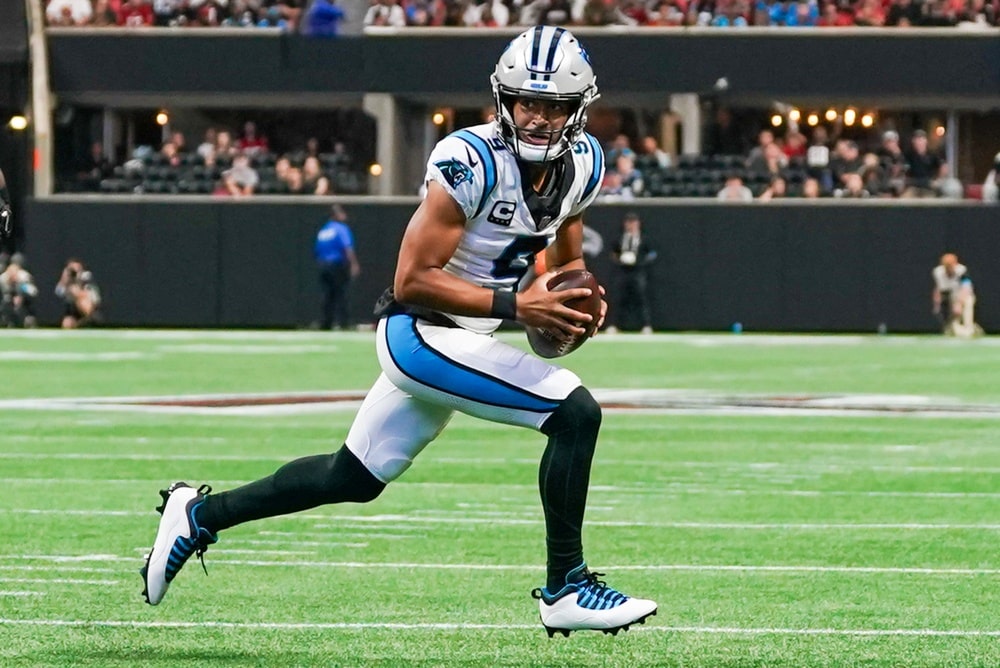
The Carolina Panthers’ recent Thursday Night Football appearance resulted in a 27-19 loss to the Green Bay Packers, a result that further tightens the race in the NFC South. While much of the post-game scrutiny has centered on the performance of Bryce Young, wide receiver Jalen Coker has stepped forward to defend his quarterback, emphasizing that the offensive struggles are a collective responsibility rather than the fault of a single player.
Young finished the contest with one touchdown pass and one interception. The offense also struggled during a critical two-point conversion attempt that failed to materialize. Despite these hurdles, Coker believes the narrative surrounding Young’s performance misses the broader context of the team’s offensive execution.
Addressing the media after the defeat, Coker highlighted the immense pressure placed on the young signal-caller. He noted that Young is tasked with managing a significant amount of the offensive burden. Coker took personal accountability for the lack of production, stating that he needs to improve his ability to get open and create cleaner windows for his quarterback. His comments reflected a veteran-like perspective, acknowledging that the complexities of professional football often make execution more difficult than it appears from the sidelines.
Analyzing Jalen Coker’s Impact and Statistical Contributions Against Green Bay
While Coker managed to secure the team’s lone receiving touchdown, his overall involvement in the passing game was limited. He hauled in two of his five targets, finishing the night with 36 receiving yards. This performance comes on the heels of a quiet outing against the Tampa Bay Buccaneers the previous week, where he was held to just nine yards. Through this point in the season, Coker has accumulated 364 receiving yards.
The Panthers did find some success on the ground, led by running back Chuba Hubbard. Hubbard provided a consistent spark for the offense, recording 81 rushing yards and scoring a touchdown. His ability to move the chains remains a vital component of Carolina’s strategy as they look to find more balance between the run and the pass.
Despite the setback at Lambeau Field, the Panthers remain in a primary position within the NFC South. With a 3-4 record, they currently hold a share of the divisional lead alongside the Atlanta Falcons. With the division remaining entirely up for grabs, the Panthers’ ability to refine their offensive chemistry will be a deciding factor in the weeks ahead.
Final Thoughts on the Panthers’ Path Forward
The loss to the Packers serves as a reminder of the narrow margins for error in the NFL. Jalen Coker’s public support for Bryce Young suggests a unified locker room, which is essential for a young team navigating a divisional title race. For Carolina to stay atop the NFC South, they must translate that chemistry into more consistent on-field production, specifically by increasing the efficiency of the passing game and supporting Young through better route running and separation.