




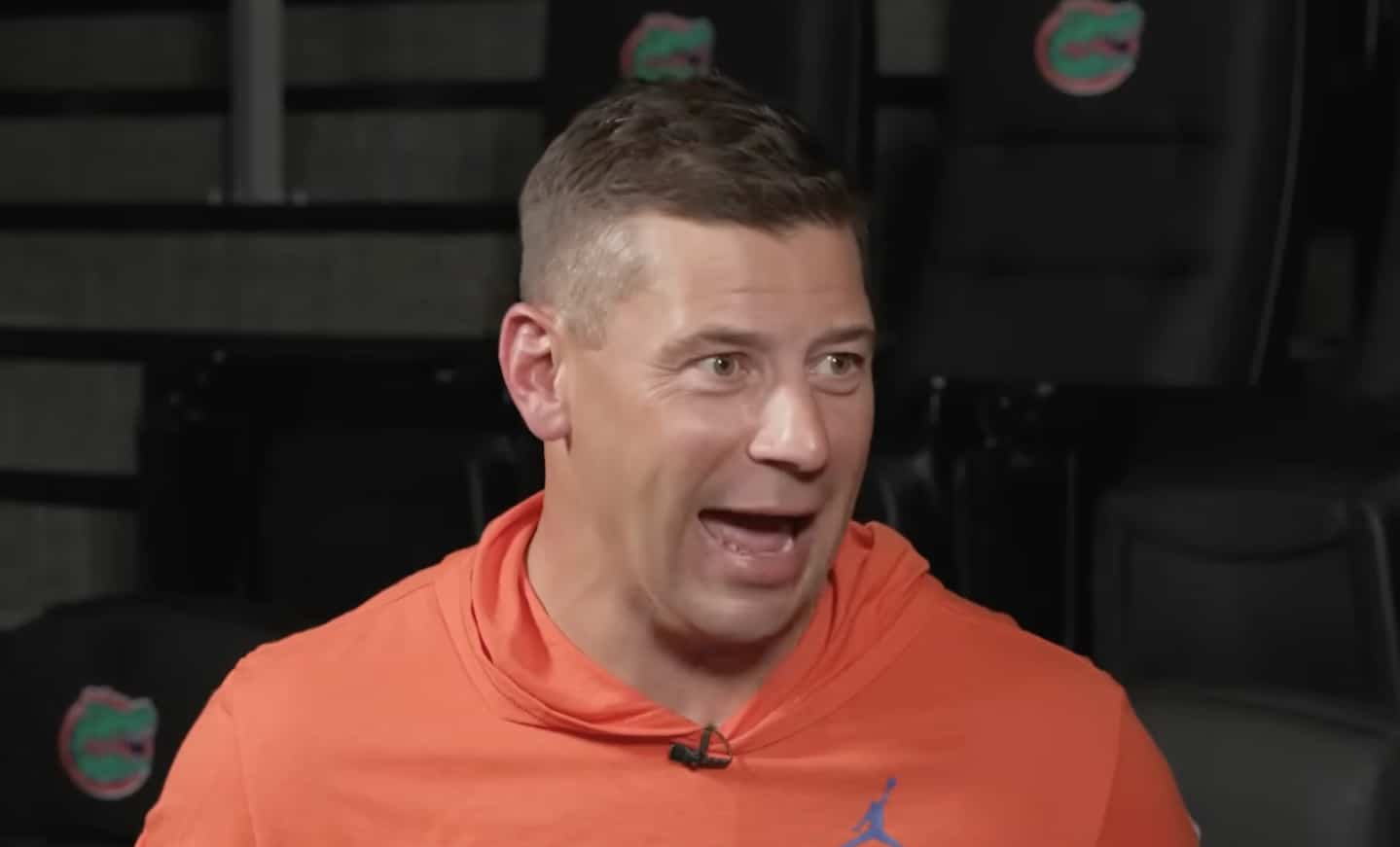
Gainesville, Florida — Jon Sumrall, the newly appointed leader of the Florida Gators, views his new program as a sleeping giant. Describing it as a “beast” that requires a forceful awakening, Sumrall steps into a role where the expectations are high, yet the recent results have been lackluster. The Gators have struggled to surpass the eight-win mark in the regular season since 2019, a drought that ultimately led to the departure of Billy Napier following a disappointing 4-8 campaign. In a move to restore the program’s championship pedigree, Athletic Director Scott Stricklin once again looked to the Group of Six coaching ranks in Louisiana to find a savior.
Navigating the pressures of a high-profile SEC job is daunting, but Sumrall relies on a remarkably simple mantra to handle the inevitable setbacks of college athletics.
Embracing Adversity with the “Good” Philosophy
In Sumrall’s office, which overlooks the Gators’ practice facilities, his 12-year-old son, Sam, has left a visible mark on the decor. Amidst playbooks and administrative notes, the word “good” is written everywhere—large, small, and even upside down. This isn’t just a child’s doodle; it is the foundational philosophy Sumrall uses to communicate with his team and his followers on social media, especially when celebrating new recruiting commitments.
The program’s momentum on the recruiting trail has indeed been positive. Since April, Florida has secured 11 verbal commitments, highlighted by the addition of five-star offensive lineman Maxwell Hiller. However, Sumrall’s “good” response isn’t reserved only for victories. Whether a top prospect signs or chooses a rival, the answer remains the same. This mindset is rooted in the teachings of former Navy SEAL Jocko Willink, who advocates for reframing every obstacle as an opportunity for growth.
Sumrall’s commitment to this ideology is so deep that he shares Willink’s videos with his team twice a year. He recalls an instance during his third game as a head coach when an early interception led him to tell his staff, “Good. I don’t want to watch our offense right now anyway.” Even after losing that same game on a last-second Hail Mary, he maintained his stance, believing the team needed that “gut punch” to prepare for the future. That team eventually rattled off 11 consecutive wins and finished the season ranked in the top 20 nationally.
This approach centers on attitude—one of Sumrall’s four pillars alongside toughness, discipline, and love. He often cites the idea that life is 10% what happens and 90% how one reacts. While similar to the “process-oriented” approach made famous by Nick Saban, Sumrall’s version allows for the sting of defeat to serve as a visceral motivator. He admits that losses should feel sickening, using that discomfort to fuel the relentless pursuit of excellence and combat the “disease” of complacency.
The Shifting Landscape of Post-Spring Roster Management
The current college football calendar has introduced a rare moment of stability in May. For Sumrall, the typical chaos of the spring transfer portal has been replaced by a quieter period, largely due to stricter enforcement regarding “ghost transfers” and severe penalties for tampering. These rules include significant fines and potential suspensions for coaches who circumvent the established windows.
For an established program, this lack of movement is ideal, as it prevents late-hour roster poaching and scholarship renegotiations. However, Sumrall notes that for a first-year coach, the absence of a second portal window can be a double-edged sword. At previous stops, he successfully used the spring window to fill critical gaps in the roster after seeing his players perform in live practices. While he appreciates the long-term health a single portal window provides for the sport, he acknowledges that in “year one,” a little extra reinforcement would have been beneficial to jump-start the Florida rebuild.
Blending Professional Structures with College Traditions
While many programs claim to operate like NFL franchises, Sumrall acknowledges that college football occupies a unique middle ground. The constant demand for recruiting makes it impossible to fully replicate the pro model. To manage this hybrid environment, Florida has invested heavily in a professionalized front office. The staff includes General Manager Dave Caldwell, formerly of the Jacksonville Jaguars, and Assistant GM Nick Polk, who brings experience from the Atlanta Falcons.
This structure allows Sumrall to remain insulated from the financial intricacies of player compensation. By delegating NIL negotiations to specialists like Caldwell, Sumrall can maintain his role as a coach rather than a dealmaker. He believes that having coaches deeply involved in money talks can “muddy the waters” and prefers a clear division of labor within his extensive front-office “army.”
Unresolved Questions Heading into the Summer Months
As the Gators transition into summer workouts, the most pressing question remains unanswered: who will start at quarterback? The competition between Aaron Philo and Tramell Jones Jr. remains one of the few high-stakes battles in the SEC. However, Sumrall is quick to point out that the success of the quarterback will depend largely on the development of the offensive line. These two units are inextricably linked, and their progress will define the narrative of the offense heading into the fall.
The path to restoring Florida football to its former glory will be filled with challenges, but Sumrall’s philosophical foundation suggests that no matter what happens, the response will be “good.”
Summary and Final Thoughts
Jon Sumrall is bringing a disciplined, NFL-influenced organizational structure to Gainesville, paired with a resilient psychological approach to coaching. By focusing on a professionalized front office to handle the modern era of NIL and the transfer portal, Sumrall is attempting to clear the path for his players to focus solely on football. While significant questions remain at quarterback and on the offensive line, the program appears to have found a leader who views every obstacle as a necessary step toward waking the “beast” of Florida football.