






In the world of NFL draft scouting, whether it is a “way-too-early” projection or a final mock in April, the conversation inevitably centers on the quarterbacks. Following a period where only four signal-callers went in the first round over two years, the 2024 class broke the mold with six going in the top 12. If the 2027 class follows current projections—though college football rarely follows a script—we could see a similar gold rush for quarterbacks next spring.
Leading the pack is Dante Moore, who takes the top spot in this projection. While some may find it bold, Moore’s talent has long placed him in the elite tier. Had he not opted to return to Oregon, he likely would have been the second overall selection for the Jets. His decision to stay in school sets the stage for a massive battle at the top of the board.
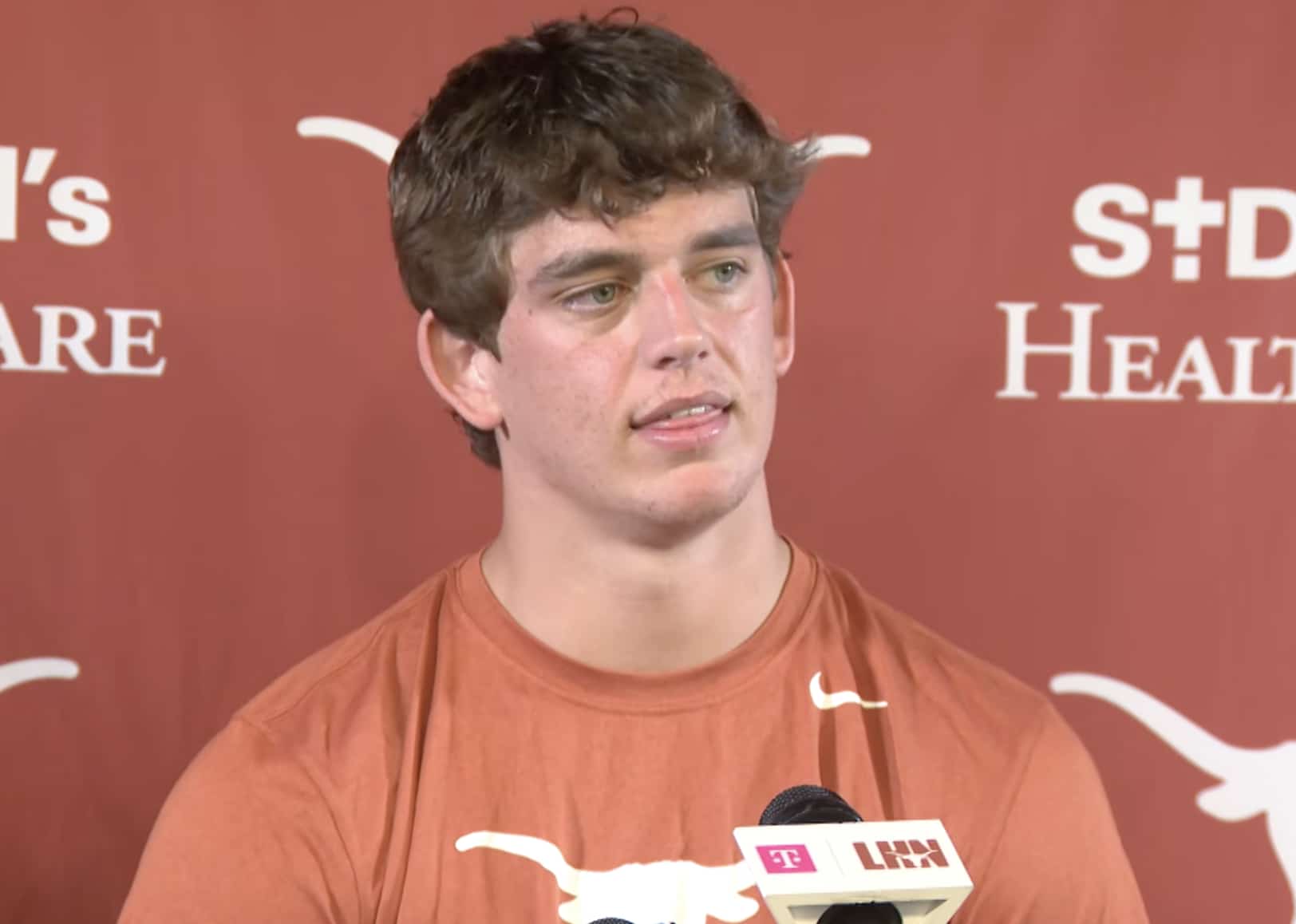
Parallel to Moore’s rise is the inevitable momentum surrounding Arch Manning. Driven by a mix of media attention and an NFL scouting culture that views elite family history as a safety net against the risks of a franchise QB, Manning remains a locked-in contender for the top spot. Beyond the big two, the depth of this class appears formidable with talents like Jayden Maiava, Darien Mensah, CJ Carr, and Drew Mestemaker surfacing as potential first-rounders. Names like Julian Sayin, Nico Iamaleava, and Josh Hoover further suggest a class that could be historic—though as we see every year, many “can’t-miss” prospects will fade before the draft actually arrives.
It is important to view this exercise as a living watchlist rather than a definitive prediction. This is a snapshot of the current landscape heading into the 2026 college football season, capturing the traits and trajectories of players before the fall season inevitably reshuffles the deck. History shows us that 2027 will likely be defined by its quarterbacks, much like the 2024 class. For context, previous way-too-early mocks successfully identified Bo Nix, Michael Penix Jr., and Caleb Williams as first-rounders, even if others like Quinn Ewers saw their stock fluctuate or players like Jayden Daniels rose from obscurity to the top of the board.
The following draft order is based on reverse Super Bowl odds from FanDuel Sportsbook. Note that the New York Jets hold three first-round picks due to trades involving Quinnen Williams (Cowboys) and Sauce Gardner (Colts). Additionally, the Cowboys possess the Packers’ pick from the Micah Parsons trade.
1. Miami Dolphins: Dante Moore, QB, Oregon
Moore’s choice to remain at Oregon prevented him from being a top-two pick in 2026. He possesses high-level composure in the pocket and an elite ability to create plays when the initial structure breaks down. His performance throughout 2025 solidified his status as the premier quarterback in this class, notably outshining Arch Manning and others in head-to-head comparisons.
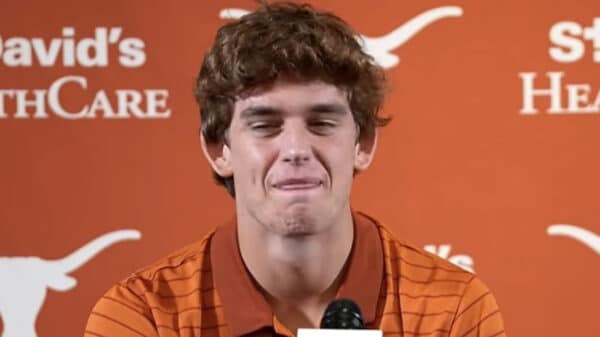
2. New York Jets: Arch Manning, QB, Texas
Following a slow start to his 2025 campaign, Manning closed the season with incredible momentum. If he carries that high level of play into the upcoming season, he will be a primary candidate for the first overall pick. The hype remains high, but the late-season tape justifies the excitement.
3. Arizona Cardinals: Jayden Maiava, QB, USC
Maiava is a physically gifted passer with the arm strength to make every NFL throw. He shows excellent touch on layered passes over the middle. To maintain his status as a top-three pick, he will need to prove he can provide consistent play throughout an entire season.
4. Cleveland Browns: Jeremiah Smith, WR, Ohio State
Smith is currently viewed as a superior prospect to Marvin Harrison Jr. at the same stage of development. His physical profile and skill set invite comparisons to legendary receivers like Julio Jones and Calvin Johnson. He is a generational talent at the position.
5. Tennessee Titans: Colin Simmons, EDGE, Texas
Simmons is a versatile pass rusher who can beat offensive tackles with pure speed, sudden twitch, or raw power. After a dominant 2025 season where he seemed nearly unblockable, expectations are even higher for his next collegiate campaign.
6. Las Vegas Raiders: Trevor Goosby, OT, Texas
Goosby has the massive frame and athletic profile that NFL scouts covet in a franchise tackle. While he is still refining his technique against elite speed rushers, his ability to anchor against power is already at a professional level.
7. New Orleans Saints: Dylan Stewart, EDGE, South Carolina
Stewart is a prototypical edge setter who uses his length and strength to stifle the run. As a pass rusher, he offers a surprising amount of explosive suddenness, allowing him to collapse the pocket quickly and disrupt the quarterback’s rhythm.
8. Pittsburgh Steelers: Darien Mensah, QB, Miami
Mensah is a sturdy passer with impressive accuracy on deep balls and the ability to layer throws into tight windows. While he sometimes struggles by overextending plays, his arm talent is undeniable. He follows a growing trend of Miami transfer QBs entering the first-round conversation.
9. Carolina Panthers: Leonard Moore, CB, Notre Dame
Moore is a smooth, fluid athlete who excels at staying in phase with receivers. His length makes him a nightmare for quarterbacks on downfield shots, and his versatility allows him to cover both the slot and the boundary effectively.
10. Atlanta Falcons: David Stone, DT, Oklahoma
Stone is a high-motor interior defender with the quickness to penetrate gaps and disrupt plays in the backfield. He is a versatile piece on the defensive line who consistently finds himself near the ball in run defense.
11. New York Giants: Matayo Uiagalelei, EDGE, Oregon
Uiagalelei possesses a professional-grade frame and wins primarily with power and effort. While he needs to develop more flexibility and a wider array of pass-rush moves, his physical tools suggest a significant jump in production is coming in 2026.
12. Minnesota Vikings: CJ Carr, QB, Notre Dame
Carr is an efficient, high-floor game manager who rarely puts the ball in danger. With just one year of starting experience, he has already shown great touch, anticipation, and the mobility to make plays outside of the pocket.
13. Washington Commanders: Cam Coleman, WR, Texas
Coleman is a physical mismatch for most defensive backs. He combines elite contact balance with the agility of a much smaller player, making him a dangerous threat both as a route runner and a ball carrier after the catch.
14. Tampa Bay Buccaneers: Drew Mestemaker, QB, Oklahoma State
A big-armed quarterback who can drive the ball into narrow windows, Mestemaker showed promise in his reads while at North Texas. However, he must cut down on interceptions and improve his footwork under pressure as he transitions to the higher level of competition at Oklahoma State.
15. New York Jets (via Colts): A’Mauri Washington, DL, Oregon
Washington is an athletic force on the interior who uses his low center of gravity and leverage to overwhelm blockers. He is particularly effective when attacking gaps, using his burst to blow up plays before they can develop.
16. Cincinnati Bengals: John Henry Daley, EDGE, Michigan
Daley is a technician on the edge, using refined hand work and a signature spin move to beat offensive tackles. He also possesses the necessary play strength to hold his ground and reset the line of scrimmage against the run game.
17. Chicago Bears: Caden Green, OL, Missouri
Green is a reliable pass protector with a strong anchor. While he needs to work on his pad level in the run game, his high football IQ and awareness suggest he could have a very successful NFL career, potentially sliding inside to guard.
18. Jacksonville Jaguars: Jordan Ross, EDGE, LSU
Ross is a powerful rusher who uses his leverage to physically dominate blockers and collapse the pocket. His lateral agility is particularly impressive for his size, making him a difficult assignment for tight ends in run-blocking situations.
19. New York Jets (via Cowboys): Charlie Becker, WR, Indiana
Becker exploded onto the scene in late 2025, proving to be a reliable deep threat with elite contested-catch ability. His size and body control allow him to make difficult catches in traffic look effortless.
20. Houston Texans: Quincy Rhodes, EDGE, Arkansas
Rhodes is a unique athlete who combines massive size with the mobility to play multiple roles on the defensive front. He is nearly impossible to move at the point of attack and generates massive power as a pass rusher.
21. Philadelphia Eagles: Carter Smith, OT, Indiana
Smith is a natural athlete at left tackle who excels in the run game. While he is still sharpening his technique against sophisticated speed rushers, his raw physical tools give him a very high ceiling as a blindside protector.
22. Denver Broncos: Damon Wilson II, EDGE, Miami
Wilson is a pure speed-to-power rusher who can close on the quarterback with exceptional burst. Though he may not have the flexibility of some other edge rushers, his downhill juice and leverage make him a consistent threat.
23. Dallas Cowboys (via Packers): Kade Pieper, OL, Iowa
Pieper is a standout in zone-blocking schemes and pass protection. As he adds more functional strength to his frame, he has the potential to emerge as the top interior offensive lineman in this draft class.
24. New England Patriots: Ryan Coleman-Williams, WR, Alabama
After a somewhat disappointing 2025 compared to his stellar freshman season, Coleman-Williams remains a high-end talent. If he returns to his 2024 form, he will challenge for a top-10 spot and the title of WR1.
25. Detroit Lions: Clev Lubin, EDGE, Louisville
Lubin is a modern defensive hybrid who combines power rushing with the ability to drop into coverage. His discipline against the run and positional versatility make him a perfect fit for complex, positionless defensive schemes.
26. San Francisco 49ers: Terrance Carter Jr., TE, Texas Tech
Carter Jr. is a vertical threat at tight end who runs like a running back after the catch. While he needs to improve his hands, his combination of speed and blocking effort makes him a highly valuable asset for multi-TE offenses.
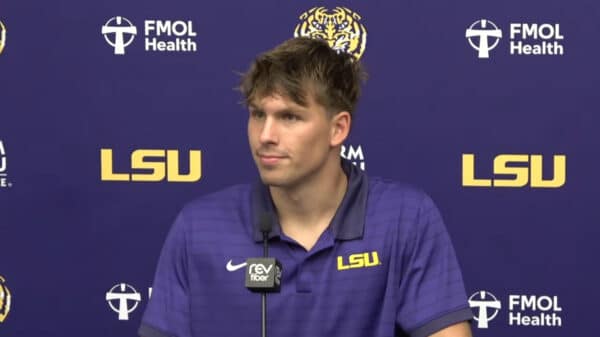
27. Kansas City Chiefs: Jordan Seaton, OT, LSU
The Colorado transfer is a massive individual who moves with surprising grace. He has the lateral quickness to mirror edge rushers and the power to lock down defenders once he gets his hands on them, excelling both in space and at the line.
28. Los Angeles Chargers: Ellis Robinson IV, CB, Georgia
Robinson is a physical defender who excels at reading the quarterback’s eyes. He is consistently disruptive at the point of the catch and has the technical discipline to thrive in both man-to-man and zone coverage.
29. Baltimore Ravens: Will Echoles, DL, Ole Miss
Echoles is an interior force who plays with a low center of gravity. His surprising quickness for a man of his size allows him to penetrate the backfield and make plays on the ball carrier regularly.
30. Buffalo Bills: Zabien Brown, CB, Alabama
Brown is a physically imposing cornerback who excels at mirroring receivers. His ability to react quickly in off-coverage and challenge every catch makes him a highly dependable secondary piece.
31. Seattle Seahawks: Nick Marsh, WR, Indiana
Marsh is a big-bodied receiver who uses his frame to shield defenders. Despite his size, he is agile enough to create separation at the top of his routes and offers significant yards-after-catch potential.
32. Los Angeles Rams: Ahmad Hardy, RB, Missouri
Hardy is a powerful, low-slung runner who is incredibly difficult to tackle. He is a perfect fit for wide-zone schemes where his “one-cut-and-go” style can result in home-run plays once he reaches the second level.
Summary of the 2027 NFL Draft Outlook
The 2027 NFL Draft is shaping up to be another landmark year for the quarterback position, led by the high-ceiling talents of Dante Moore and Arch Manning. While the draft order will certainly shift as the 2026 college football season unfolds, the current landscape features a deep pool of edge rushers and physically imposing wide receivers. With teams like the Jets and Cowboys holding multiple high-value picks, the maneuvers made in the coming year will play a massive role in shaping the future of the league.